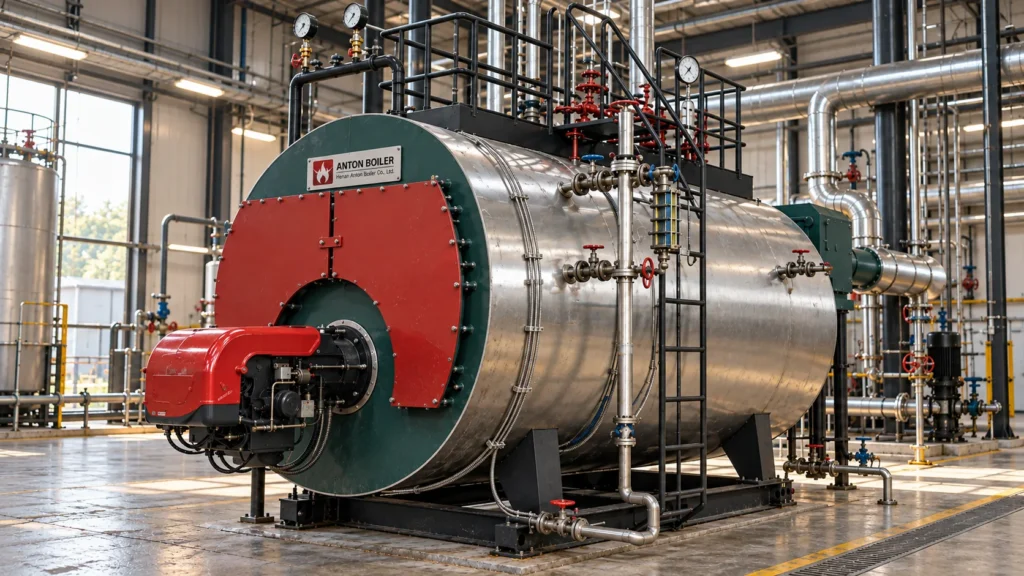
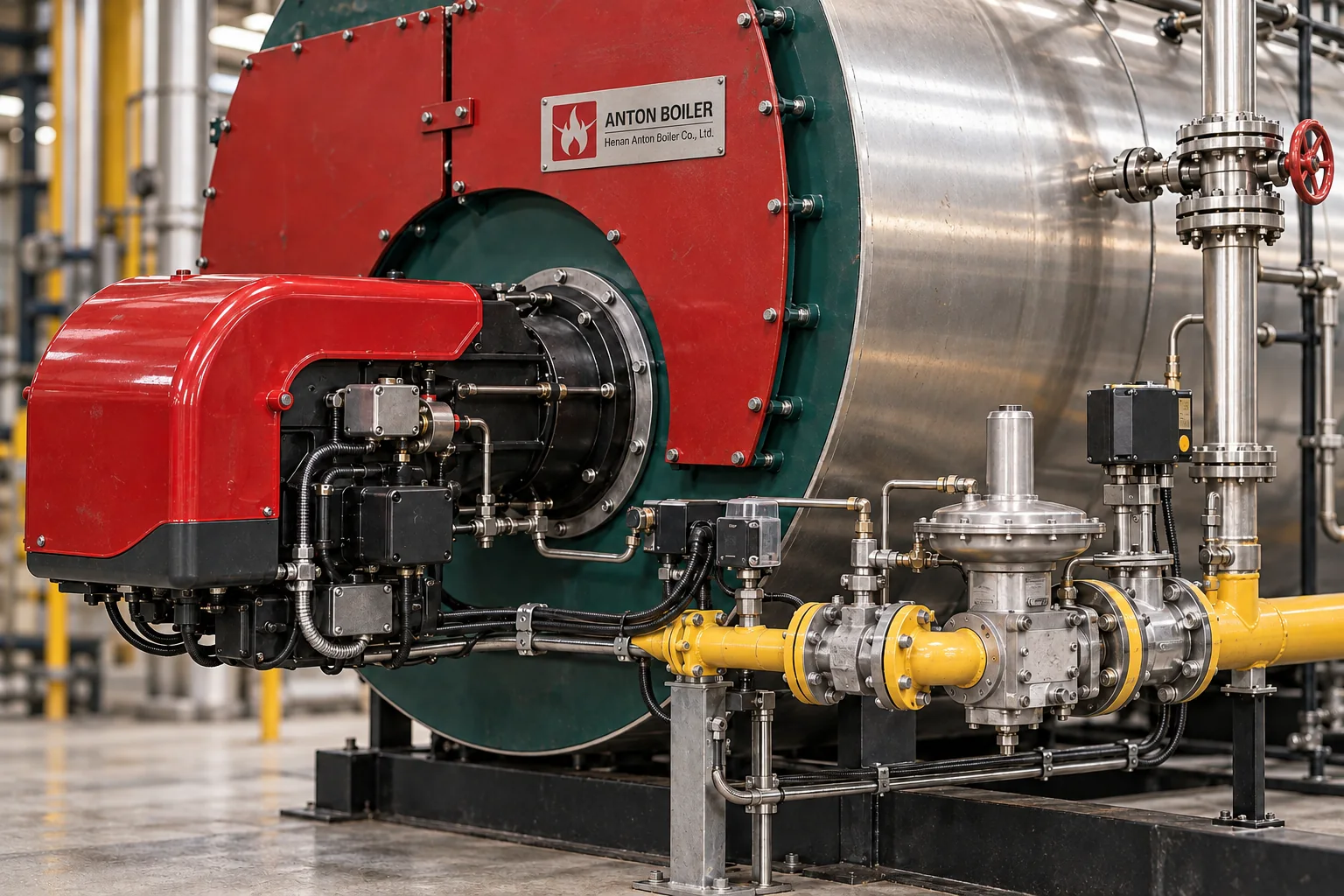
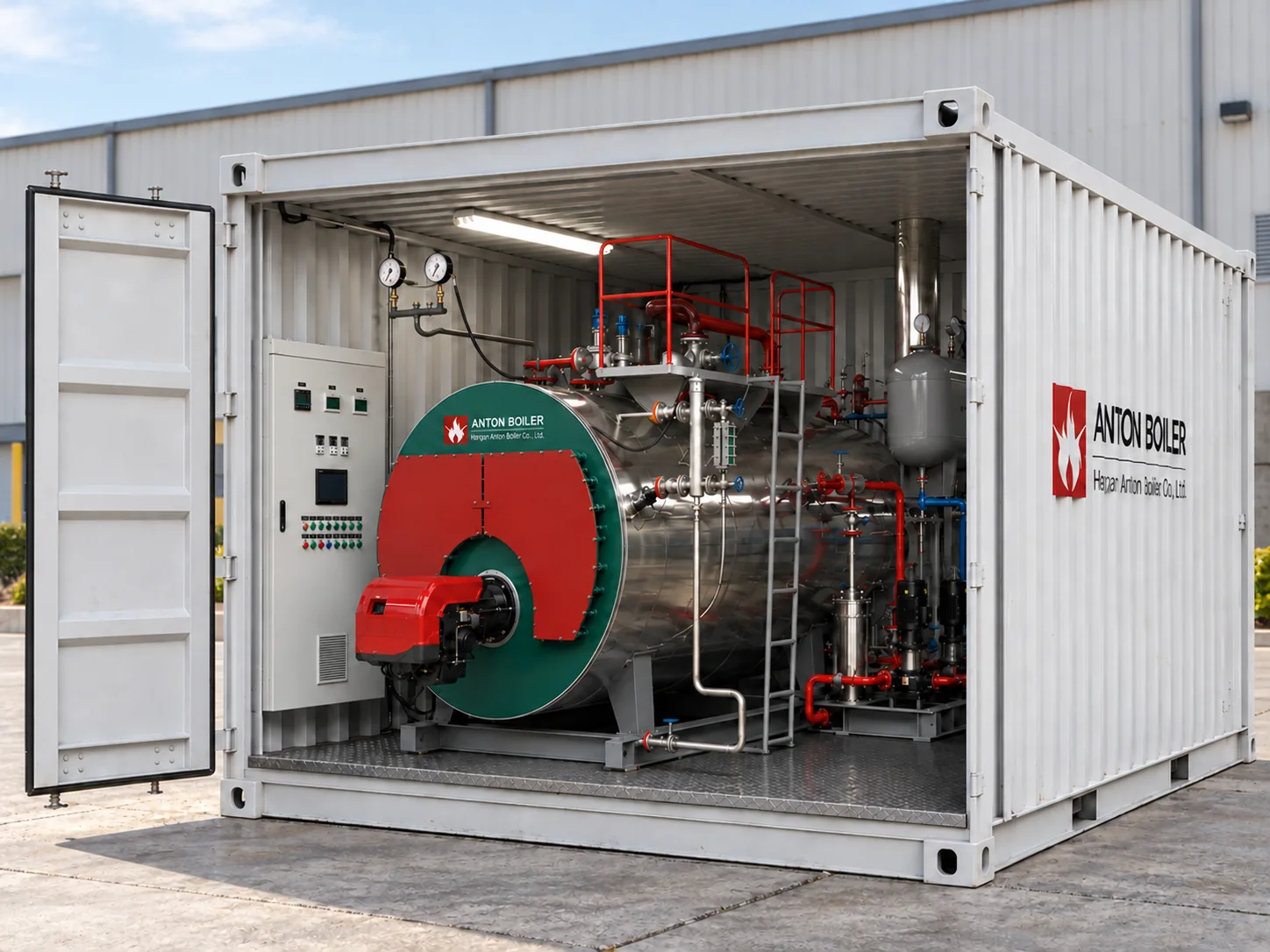
Visuals in this guide are illustrative renderings based on Anton Boiler product imagery. The trend graphic is conceptual and does not represent plant operating data.
A boiler sized for a factory’s peak demand may still switch on and off repeatedly during normal production. That pattern is often called boiler short cycling. It can occur when the heat demand falls below the equipment’s stable minimum output, but capacity is only one possible cause. Control settings, sensors, staging and changes in the process also need investigation.
This guide is for plant engineers, factory owners, EPC teams and buyers evaluating an industrial steam or hot-water boiler system. It explains how to recognize the pattern, collect useful evidence and choose a remedy without treating a single start count as a universal pass/fail limit.
Quick answer: Boiler short cycling means repeated short firing periods separated by shutdown and restart. Begin with a time-stamped record of demand, pressure or temperature, firing rate, burner status and alarms. Compare the plant’s lowest sustained demand with the confirmed minimum continuous output of the complete boiler and burner package. Then inspect control behavior and staging before proposing equipment changes.
Key takeaways
- A normal planned startup is different from repeated short cycles during steady production.
- An oversized boiler is one possible cause; a drifting sensor or narrow control band can look similar.
- Pre-purge and post-purge can remove heat during repeated starts. Actual fuel loss depends on the installation and must be measured or estimated from project data.
- Diagnose the whole steam or hot-water system: load, burner, boiler, controls, auxiliaries and operator schedule.
- A higher turndown ratio helps only if the selected package can operate safely at the required low load.
- The final solution may involve control tuning, process scheduling, a smaller lead boiler or coordinated multiple-boiler staging.
Contents
- What short cycling looks like
- Why it matters
- Seven causes to investigate
- A practical diagnosis workflow
- How to choose a remedy
- What to include in a supplier enquiry
- Frequently asked questions
What Does Boiler Short Cycling Look Like?
The U.S. Department of Energy describes a boiler cycle as a firing interval followed by post-purge, idle time, pre-purge and a return to firing. In a short-cycling situation, the burner repeatedly completes this sequence after brief firing periods. A changing batch process can create legitimate starts; the concern is a repeated pattern that is unnecessary for the real demand and control strategy. DOE, Minimize Boiler Short Cycling Losses.
Record at least one representative production shift and, when possible, a low-demand shift. Count starts, note the length of each firing and idle period, and mark what the factory was doing at the time. A single observation beside the control panel is rarely enough to explain the pattern.
Why Repeated Starts Matter
During pre-purge and post-purge, air passes through the boiler. Some stored heat can leave with that air. Fixed casing losses also become a larger share of useful output when a boiler is lightly loaded. The DOE tip sheet explains these mechanisms and recommends reviewing operating strategy, burner turndown or a smaller boiler where appropriate. Its worked savings example is an illustration, not a savings claim for an Anton Boiler installation. DOE short-cycling guidance.
Repeated starts may also create pressure or temperature swings and more operating events to maintain. Do not infer component life or fuel savings from start count alone. Review the selected burner’s service instructions, actual trend data and the plant’s process requirements.
Seven Causes of Boiler Short Cycling to Investigate
1. Capacity is too high for sustained demand
A unit may have been selected for a peak that occurs only briefly. Later production changes or heat-recovery improvements can lower actual demand further. Compare the measured minimum sustained load with the supplier-confirmed minimum continuous output. The maximum rating alone cannot answer this question. See our industrial boiler load profile guide.
2. The burner cannot modulate low enough
The nominal burner turndown ratio is maximum controllable firing input divided by minimum controllable firing input. Usable boiler-package output can differ from that simple ratio. Confirm the minimum firing input and stable operating range for the specified fuel, burner, boiler and controls. Our boiler turndown ratio guide explains the distinction.
3. Pressure or temperature settings are poorly matched
A control band that is too narrow for the process can call for frequent starts. Sensor location, lag and control response matter too. Have a qualified technician compare the actual trend with the documented control sequence and process tolerances before changing settings. Safety limits and interlocks must remain within the approved design.
4. The sensor or signal is unreliable
A drifting, poorly located or intermittent pressure or temperature signal can make the controller react to a false condition. Compare independent instruments where appropriate and inspect trend quality, calibration records and alarms. A display value alone does not prove the sensor is accurate.
5. Several boilers are sequenced badly
Two units firing at low load can cycle even though a single lead boiler could serve the demand within its stable range. Review lead/lag logic, staging thresholds, minimum run times and standby requirements as a complete system. Our single versus multiple boilers guide covers the selection tradeoffs.
6. Batch loads or scheduling create abrupt demand changes
Large users may start together, then stop together. A steam header, process sequence or buffer strategy can change the demand seen by the boiler. First map when equipment operates; avoid prescribing storage or a new boiler before the peak duration and recovery requirements are known.
7. A maintenance or protection event is being mistaken for load cycling
Loss of flame, low water, fuel-pressure issues, trips and manual shutdowns are not ordinary low-load cycling. Review the alarm and event log and follow the equipment’s approved troubleshooting procedure. If a safety device is involved, do not bypass it to reduce the apparent number of starts.
How to Diagnose Boiler Short Cycling
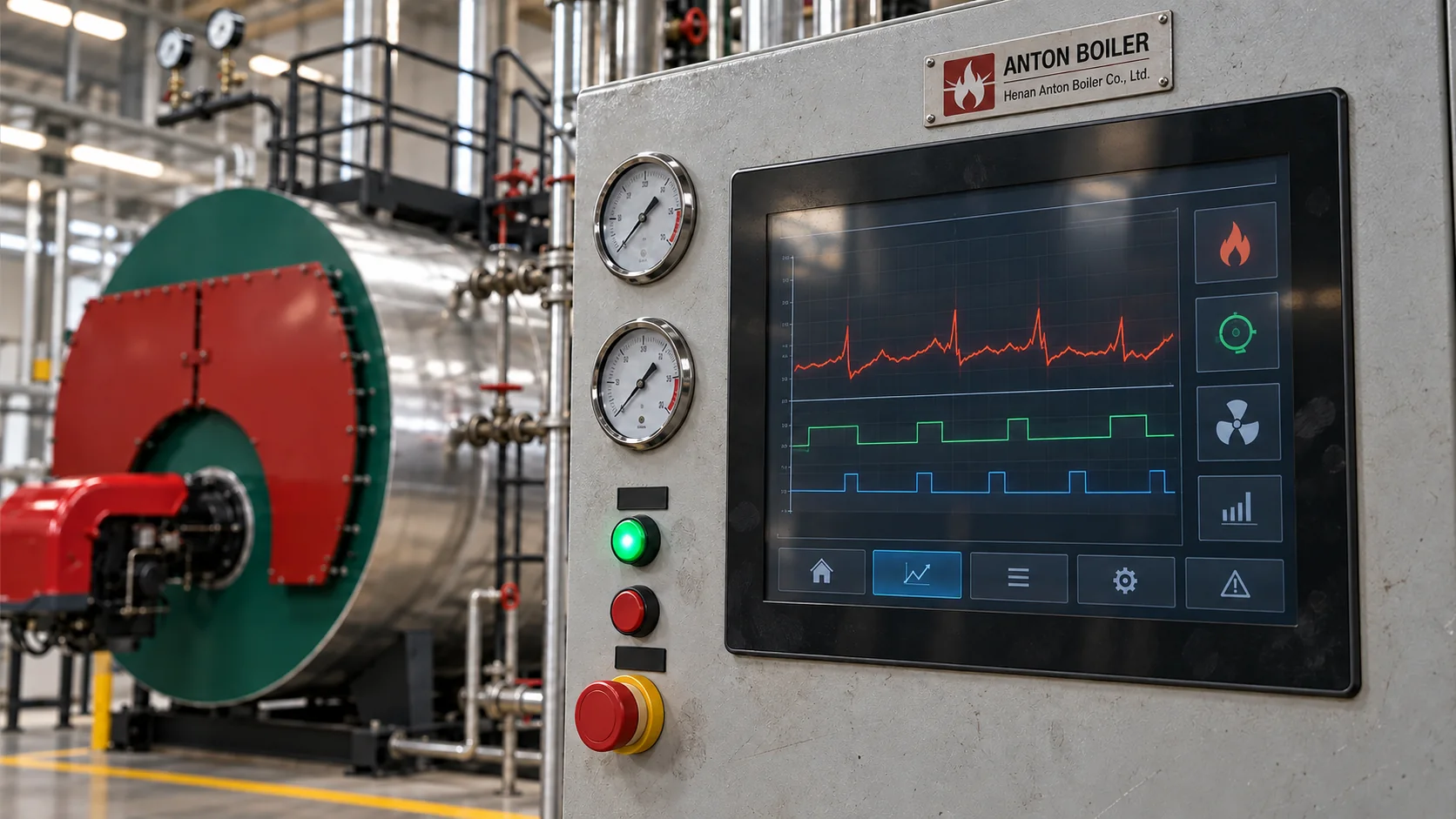
Use the following worksheet for each operating period. Record timestamps so the electrical, process and boiler trends can be compared.
| Evidence to collect | What it helps answer |
|---|---|
| Burner start and stop time | How long are firing and idle periods? |
| Boiler pressure or outlet temperature | Does the controlled variable overshoot or hunt? |
| Firing rate or fuel-valve position | Can the burner remain stable at lower demand? |
| Steam flow or heat demand, if measured | Is actual demand below minimum output? |
| Active process equipment and batch schedule | Are starts tied to predictable production events? |
| Alarm and trip history | Is this normal cycling or a protection event? |
| Boiler sequencing status | Are multiple units fighting or overlapping? |
| Fuel and utility readings | Is there evidence of a real operating-cost problem? |
Step 1: Define the operating window
Include a representative high-demand period, normal production and the lowest sustained demand. Note planned startups and shutdowns separately. A factory’s weekly pattern may be more informative than its average daily load.
Step 2: Confirm the equipment limit
Request the selected package’s minimum continuous firing input and usable output under the actual fuel and operating conditions. Do not copy a generic turndown number from another burner model.
Step 3: Compare events with demand
If demand stays below minimum output and repeated starts follow, a load mismatch is plausible. If starts occur while demand is within the stable range, investigate controls, sensors, sequencing and trips. This is a diagnostic inference, not a substitute for site testing.
Step 4: Review combustion and system performance
Flue-gas temperature and oxygen or carbon-dioxide readings can inform combustion-efficiency review, but readings must be interpreted for the actual fuel and equipment. Too much excess air can increase stack heat loss, while too little can produce incomplete combustion. Only qualified personnel should tune the burner. DOE, Improve Your Boiler’s Combustion Efficiency.
Which Fix Is Appropriate?
| Finding | Options to review | Verification before approval |
|---|---|---|
| Demand below the confirmed minimum output | Smaller lead boiler, suitable wider modulation, revised staging, process scheduling | Full load profile and selected package’s operating limits |
| Demand within range but frequent starts | Control band, sensor, response and sequencing review | Trend data, safety limits and approved control narrative |
| Starts tied to batch peaks and valleys | Batch timing, distribution, storage feasibility | Peak duration, recovery needs and system economics |
| Starts linked to faults | Repair the underlying fault | Alarm history and qualified service diagnosis |
A replacement decision should compare total system scope, fuel, standby need, installation work and lifecycle cost. It should also consider whether the current boiler can be operated within a revised, approved control strategy. No universal starts-per-hour limit or guaranteed savings percentage applies to all industrial boilers.
What to Send a Boiler Supplier

For a useful review, send Anton Boiler the application, existing boiler model and rated output, fuel specification, normal and peak demand, lowest sustained demand, pressure or temperature target, operating schedule, event log, any available trend export and the desired supply boundary. Include destination-country standards and inspection requirements for a new equipment proposal. If data are missing, mark them as pending rather than inventing values.
Frequently Asked Questions
Is every burner restart short cycling?
No. A planned startup after a production stop is different from repeated brief firings during steady demand. Evaluate the sequence over a representative period, the operating schedule and the control strategy before calling it a short-cycling problem.
Does a higher turndown ratio always solve boiler short cycling?
No. Wider modulation may help when the actual demand fits within the new stable range. Faults, sensor problems, sequencing errors and demand below even the new minimum output can still cause starts. Confirm the operating range of the selected complete package.
Can I calculate fuel savings from the number of starts?
Not reliably from starts alone. A defensible estimate needs fuel use, firing and idle durations, purge behavior, useful output and the proposed operating change. The DOE publishes an illustrative method, but its example assumptions should not be used as a site-specific quotation.
Should I change the pressure switch to reduce starts?
Only after a qualified review of the approved control and safety design. Control setpoints, limit devices and process pressure requirements serve different purposes. Changing one without trend analysis can hide a fault or create unstable operation.
Conclusion
Boiler short cycling is a symptom that deserves a measured diagnosis. Record demand and event trends, confirm the boiler’s minimum stable output, then evaluate controls, sensors, staging and production scheduling. A replacement or control upgrade should follow that evidence.
If your plant is experiencing repeated starts, contact Anton Boiler with the operating data listed above. We can review the load range and define what further technical information is needed for a suitable proposal.